Frankie Reed · 15 September 2026
Mechanical Advantage in Action: Case Studies of Lever Systems in Heavy Industry
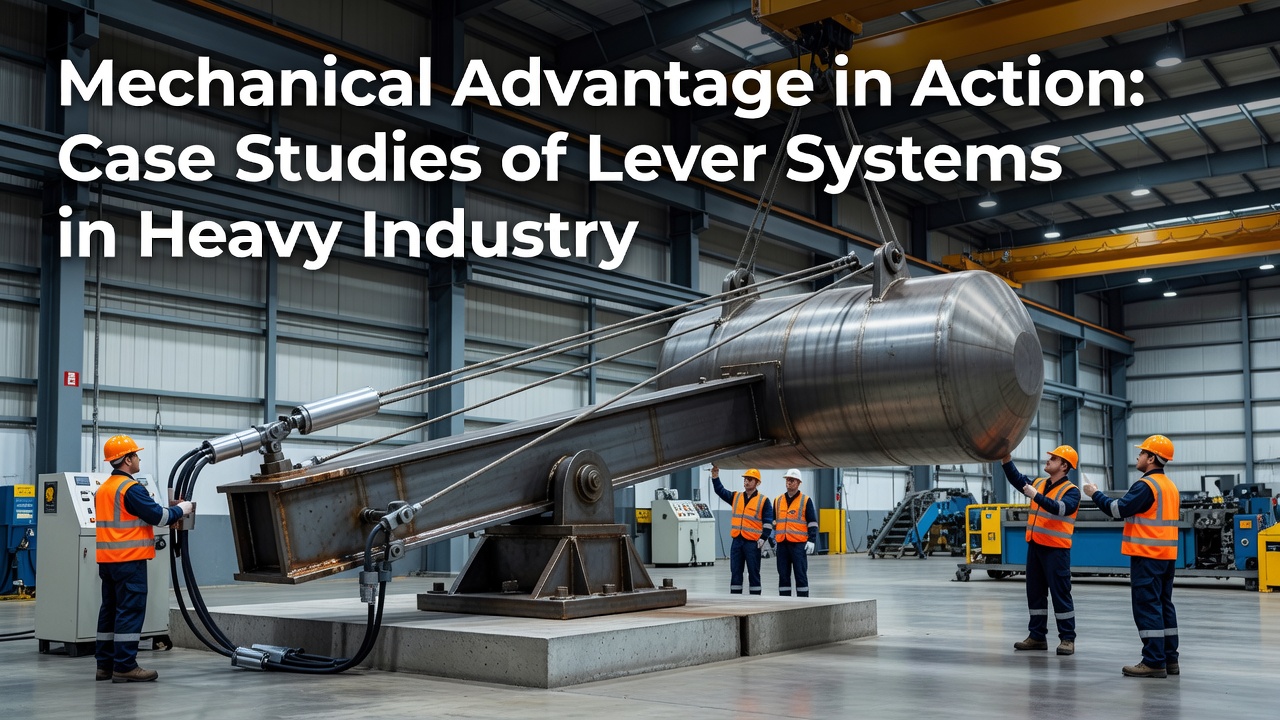
Mechanical advantage arises when lever systems multiply force to move heavy loads with reduced effort, and heavy industry relies on this principle across construction sites, mining operations, and manufacturing plants where massive materials require precise handling. Engineers design these systems around the ratio of effort arm length to load arm length, which determines how much output force results from a given input, while first-class levers balance the fulcrum between effort and load, second-class levers position the load between fulcrum and effort, and third-class levers place effort between fulcrum and load to favor speed over force multiplication.
Core Principles Behind Lever Efficiency
Studies from engineering institutions show that mechanical advantage equals the length of the effort arm divided by the length of the load arm, allowing operators to lift weights far exceeding direct human capacity when arm proportions favor the input side. In practice, data from industrial applications reveals that second-class lever configurations in pallet jacks and certain press mechanisms deliver advantages ranging from 4:1 to 10:1, which reduces operator strain and increases throughput in repetitive tasks. Observers note that friction losses at pivot points and material deformation under load can lower actual gains below theoretical calculations, prompting regular maintenance protocols that keep systems operating near peak efficiency.
Application in Mining Equipment
Mining draglines employ extended boom levers to scoop and relocate tons of overburden in single cycles, and case records from Australian operations indicate that these machines achieve mechanical advantages exceeding 20:1 through hydraulic assistance combined with long moment arms. Workers position the fulcrum at the base while the load sits at the bucket end, which amplifies small cab inputs into massive swinging forces that clear excavation sites faster than alternative methods. Reports compiled by the Canadian Centre for Occupational Health and Safety document how lever calibration adjustments in these systems have lowered injury rates during high-volume shifts, since operators apply controlled effort rather than brute force against resistant materials.
Construction Crane Systems in Practice
Tower cranes utilize third-class lever arrangements where the operator applies effort close to the fulcrum to swing loads suspended farther out on the jib, and this setup trades some force multiplication for greater reach and positioning speed essential on urban job sites. Field measurements taken during projects in the European Union demonstrate that counterweight placement extends effective effort arms, restoring mechanical advantage values that allow lifts of 10 to 50 metric tons with motors sized for far smaller peak demands. When load distances increase, operators compensate by reducing swing radii or adding tag lines, and such adjustments maintain stability while preserving the core leverage benefit that makes these machines indispensable for steel erection and concrete placement.
Manufacturing Press Operations
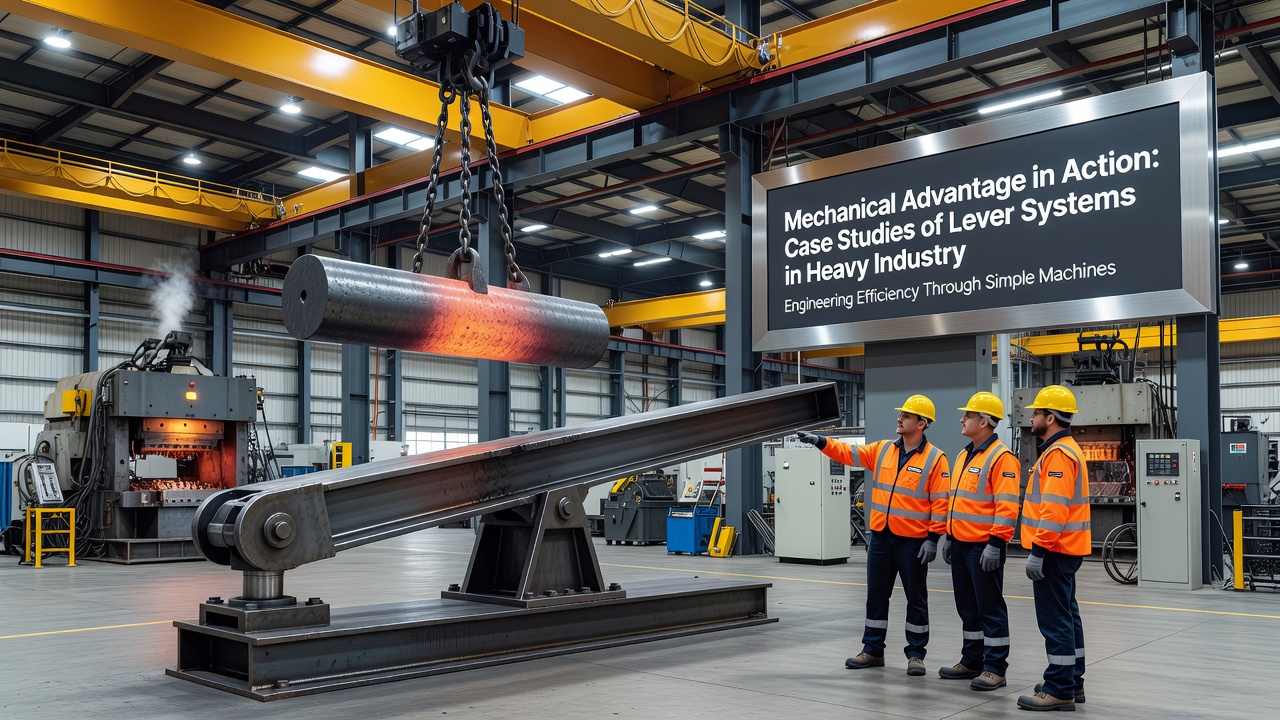
Hydraulic presses in metal forming plants integrate lever linkages that multiply cylinder output to achieve tonnage ratings required for stamping thick plates, and production logs from facilities in North America show cycle times shortening when arm ratios are optimized to match material resistance profiles. The fulcrum sits at the frame base while effort from the ram acts through intermediate links, creating compound advantages that exceed single-lever limits and permit smaller power units without sacrificing peak pressure. Research conducted at technical universities highlights how sensor feedback loops now monitor actual mechanical advantage during runs, flagging deviations caused by wear before they affect product quality or safety margins.
Emerging Adjustments Ahead of 2026 Standards
Industry analyses project that machinery updates scheduled around September 2026 will incorporate refined lever geometries to meet revised efficiency benchmarks, and early adopters in heavy equipment fleets have already reported measurable drops in energy consumption after retrofitting fulcrum positions. These changes build on existing designs rather than replacing them, preserving proven reliability while addressing regulatory expectations for reduced environmental impact during continuous operation.
Conclusion
Lever systems continue to underpin heavy industry performance because they convert modest inputs into controlled, high-magnitude outputs across diverse environments, and ongoing refinements in materials and monitoring sustain their relevance as equipment scales grow larger. Case evidence from multiple sectors confirms that proper application of mechanical advantage principles supports both productivity gains and operational safety when designs account for real-world variables like friction and load variability.